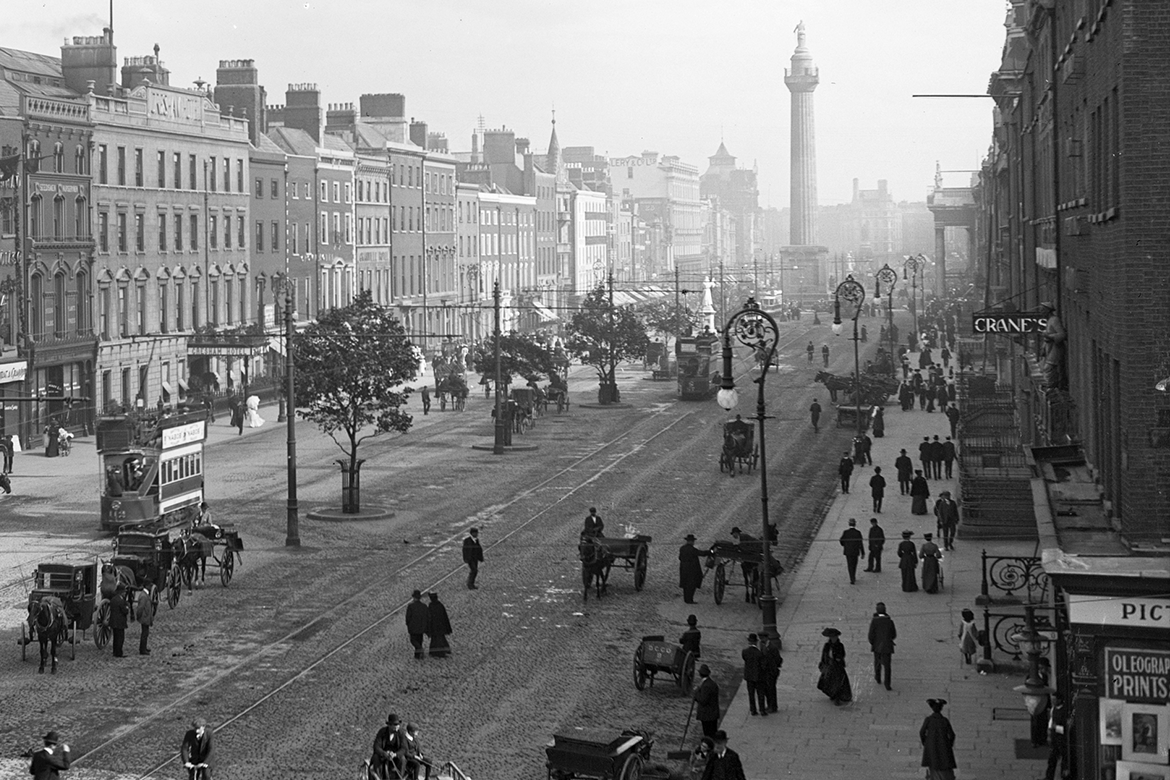
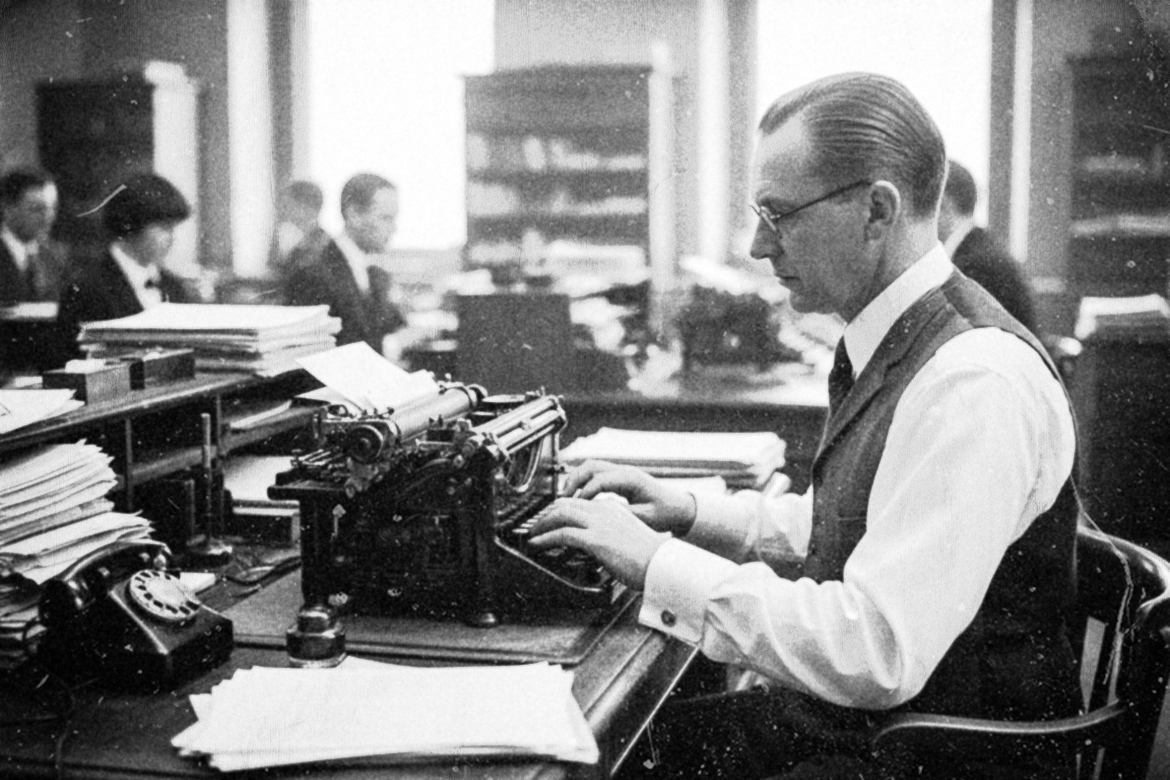
If you’d walked along Dublin’s Lower Sackville Street in the 1910s, the clatter you heard above the trams might have been the Foley Typewriter Trading Company putting an Underwood Model 5 through its paces. From their office in Reis’s Chambers, Foley’s promised something quietly radical for its time: fast, anonymous, professional typing and duplicating for anyone who needed to get a message out – campaigners, small firms, editors, solicitors, jurors’ clerks, you name it.
The paper trail they left tells its own story. Surviving ads and official papers show Foley’s pitching a simple, irresistible value proposition: “Any make of Typewriter. Repaired” and, crucially for non-typists, on-demand office services – copying, circulars, the day’s version of bulk email. The first half of the 21st century saw this company keeping communications alive through various conflicts by providing not only hardware in the form of a range of cutting-edge typewriters, but also through the production of circulars, letters and promotional material. The technology advances, the messages evolve, but the promise remains: give us the content; we’ll deliver the clean, legible output at speed.
History literally scorched the margins of their ledger. When the Easter Rising tore through the city centre in 1916, Foley’s premises in Reis Chambers were among those caught up in the destruction. A claim to the Property Losses (Ireland) Committee details ruined stock – machines, supplies, fittings – yet the firm re-established and kept trading at 25 Bachelor’s Walk. There’s a quiet resilience in those forms: a service business picking itself up so people, movements and companies could keep communicating.
Foley’s client list – reconstructed from archives – reads like a cross-section of civic life. They corresponded with the suffrage paper The Irish Citizen about printing circulars; elsewhere, a receipt surfaces for “350 copies of letter to members of Jury Panel.” Not propaganda machines so much as infrastructure: the hired hands who made sure messages reached inboxes of the day – letterboxes and desks.
Why does a century-old typing office matter now? Because the problem it solved hasn’t changed; only the medium has. Today we swim in audio: Zoom boards, Teams town-halls, stakeholder interviews, expert panels, podcasts, voice notes. Raw speech is rich but unsearchable; it hides insights in hours of tape. Foley’s value proposition maps neatly onto the modern need for human-led transcription: take messy, mission-critical speech and return clean, structured text you can share, search, quote, and act on.
What Foley’s sold was not keystrokes – it was clarity on deadline. Their ads spoke to reliability (“Any make… Repaired”), but their letters show the wider service layer: formatting, duplication, distribution. Today, that translates to transcripts that land ready-to-use, speaker-labelled, time-stamped, anonymised where needed, GDPR-aware, and styled to drop into a report or a press release. The more chaotic your inputs, the more valuable the output: think stakeholder interviews condensed into shareable highlights; board calls distilled to bulletproof minutes; oral histories and research interviews transformed into text you can code and compare.
There’s one more lesson in Foley’s longevity: trust. A typing office handling circulars for activists or letters to jurors had to be discreet, accurate and fast, or it wouldn’t survive. The same standard applies now. If you’re weighing whether to outsource transcription, borrow Foley’s yardstick: Will they protect your data? Will they capture tone and nuance, not just words? Will the document they return let you move faster?
A century ago, Irish business leaders climbed the stairs at Reis Chambers and handed over their words. Today, you upload your audio. The need is identical: make it readable, make it reliable, make it ready. Foley’s would understand.
And in many ways, their legacy hasn’t vanished – it has evolved.
The Transcription Shop, led by Managing Director Leah Foley, carries that tradition forward as Ireland’s modern provider of choice for organisations that value clarity and precision. Where Foley’s once operated with carbon paper and Underwood machines, The Transcription Shop works with encrypted uploads, digital workflows, and state-of-the-art quality control – to deliver transcripts that are fast, reliable, accurate, and secure.
It’s the same spirit of service, but built for a world that moves at the speed of digital communication. Fully up-to-date, technologically advanced, and uncompromising on human accuracy, The Transcription Shop turns the spoken word into polished, usable text – ready to share, analyse, publish, or archive.
If Foley’s helped a generation find its voice in print, The Transcription Shop helps today’s professionals capture every voice – and makes sure it can be heard.

